
Using a consistent, tool-free support system (like EZ Tree Wrap) is typically the fastest and most reliable method for supporting nursery trees on trellis systems. It improves consistency across crews while reducing installation time and minimizing the risk of tree damage.
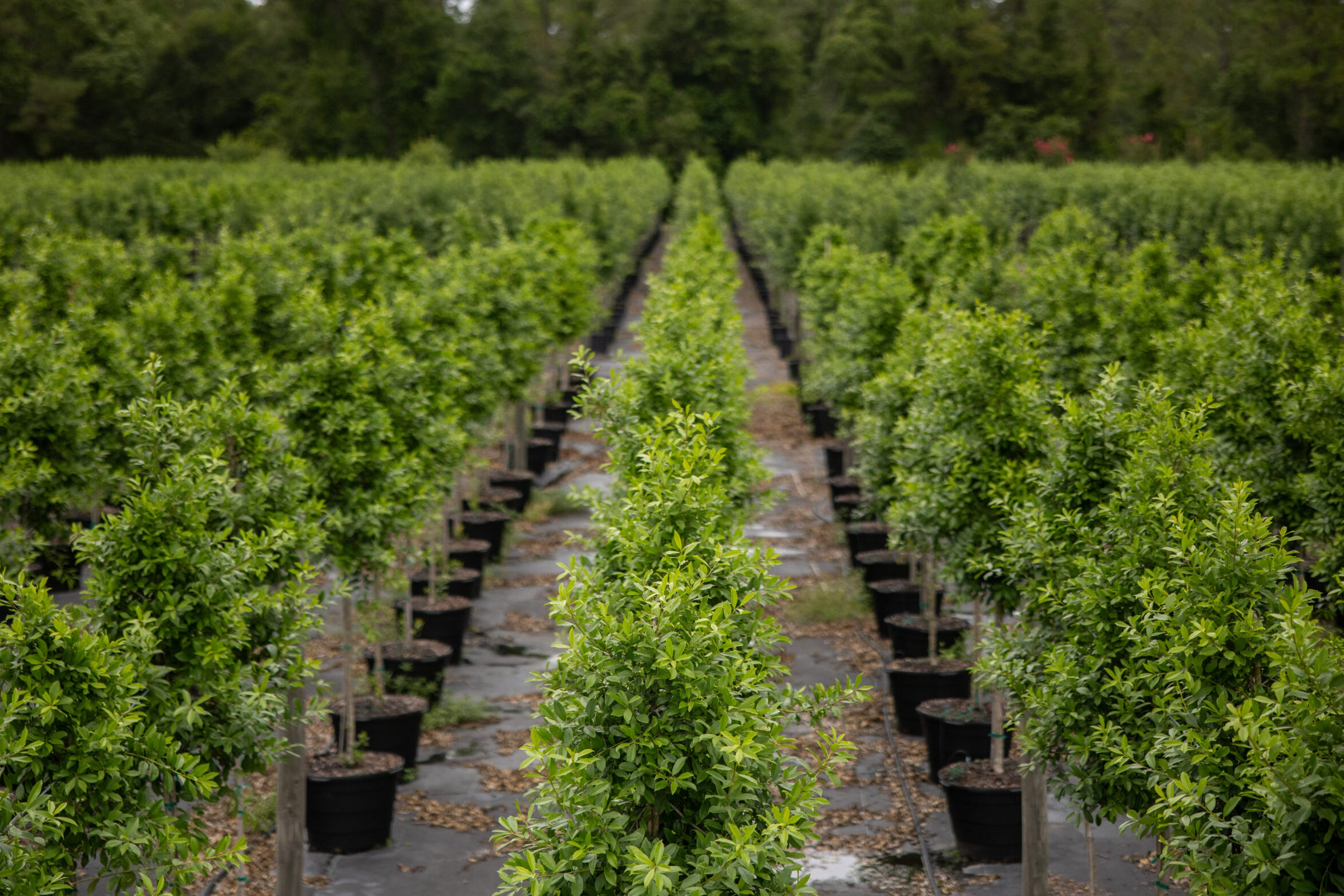
How To: Support Nursery Trees on Trellis Systems (Without Slowing Down Your Crew)
Supporting trees on trellis lines is a critical part of nursery production, but it can also be one of the most time-consuming and inconsistent tasks if not done right. Between tying, adjusting, and fixing issues, crews often spend more time than necessary just keeping trees upright and properly positioned.
The goal isn’t just support — it’s efficient, consistent support that doesn’t slow your operation down. Here’s how to do it.
Why Tree Support Systems Matter in Nurseries
Supporting trees on a trellis system isn’t just about keeping them upright—it directly impacts the quality, uniformity, and efficiency of your entire operation.
When trees are properly supported, they grow straighter, maintain consistent spacing, and are far less likely to suffer damage from wind or handling. This leads to a more uniform crop that’s easier to manage, transport, and sell.
Well-designed support systems also help crews move faster and work more consistently. Instead of relying on individual technique, you create a repeatable process that delivers the same result across every row.
Trellis-supported trees help:
- Maintain straight, uniform growth
- Reduce losses from wind or leaning
- Improve spacing and organization
- Create a more consistent product
But just as important as whether you support trees is how you do it. The method you use has a direct impact on:
- Labor time across your crew
- Tree health and long-term development
- How often adjustments and rework are needed
Types of Tree Support Systems Used in Nurseries
Before choosing a support method, it’s important to understand how different systems perform in real nursery conditions—not just in theory. Each approach has tradeoffs in labor, consistency, and scalability.
1. Tree Staking
Tree staking is one of the most traditional methods, where each tree is supported individually with a stake.
This approach is often used in smaller operations or during early growth stages, but it requires ongoing manual tying and adjustment. As production scales, it becomes harder to maintain consistency and efficiency across crews.
2. Trellis Systems
Trellis systems use horizontal wire lines to support entire rows of trees, making them ideal for high-density production.
They reduce the need to handle each tree individually and create a more uniform growing environment. However, the effectiveness of a trellis system still depends heavily on how trees are attached to the wire.
3. Traditional Ties and Clips
Many nurseries rely on materials like twine, zip ties, or plastic clips to secure trees to the trellis.
While these options are inexpensive upfront, they tend to slow crews down and produce inconsistent results. Over time, the labor required to install, adjust, and replace them adds up significantly.
4. System-Based Supports (Modern Approach)
Modern support systems are designed to solve those exact problems.
Instead of relying on manual tying, these systems focus on speed, repeatability, and ease of use. They allow crews to install supports quickly, adjust them easily, and achieve consistent results across large blocks.
Choosing the right system depends on your scale, crop type, and labor availability—but in most cases, consistency and speed are what separate efficient operations from inefficient ones.
The Problem with Traditional Tree Ties and Clips
Many nurseries still rely on basic materials like twine, clips, and zip ties because they’re familiar and inexpensive. But what seems simple upfront often creates problems in the field.
These methods depend heavily on individual workers—how tight they tie, how often they adjust, and how carefully they handle the tree. That leads to inconsistency across rows and crews.
Common issues include:
- Slow installation that limits daily productivity
- Inconsistent tightness, leading to poor support or trunk damage
- Increased time spent retying and adjusting
- Higher risk of marking or injuring the tree
Over time, these small inefficiencies compound into significant labor costs and operational frustration—especially in larger nurseries.
A Better Approach: Systemized Tree Support
To solve these challenges, many nurseries are shifting away from manual tying methods and toward systemized support approaches. The goal is simple: create a process that any crew member can perform quickly and correctly, every time.
A well-designed system should be:
- Fast to install in the field
- Easy to adjust as trees grow
- Consistent across different workers and crews
- Gentle on the tree to prevent damage
Instead of treating tree support as a repetitive task, systemized approaches turn it into a scalable process—one that reduces labor while improving overall quality.
How EZ Tree Wrap Simplifies Trellis Support
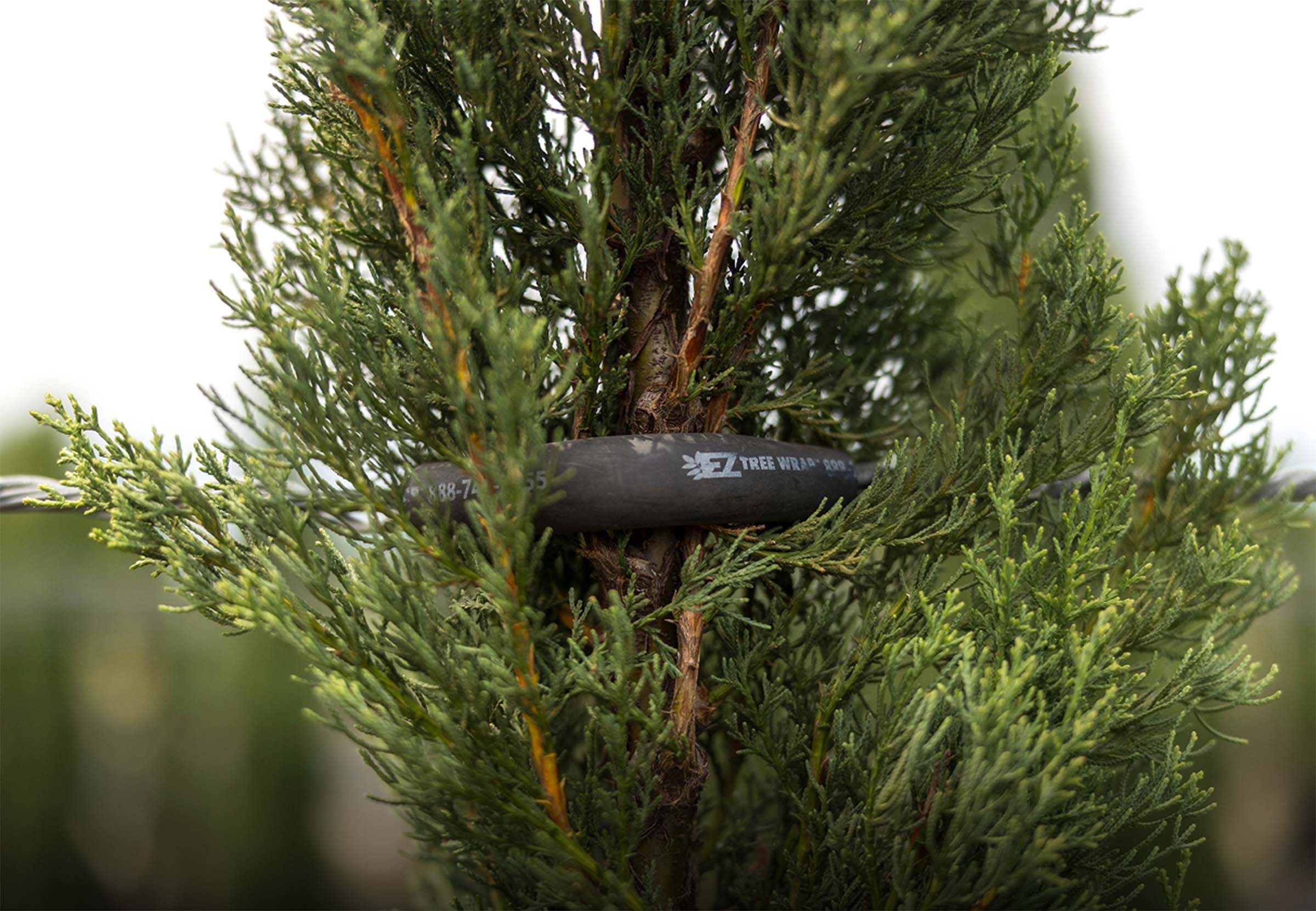
EZ Tree Wrap is designed specifically to solve the problems of traditional tying methods.
It’s a tool-free system that:
- Cradles the trunk without damaging it
- Attaches securely to the trellis line
- Allows natural movement while holding position
- Can be installed and removed in seconds
What makes it different:
- No clips, ties, or clamps needed
- No trunk damage or marking
- Reusable across seasons
- Easy for crews to learn and use consistently
It turns a slow, manual task into a fast, repeatable process.
How to Set Up a Tree Support System on a Trellis Line
Step 1: Install Your Trellis Line
- Use appropriate wire (commonly galvanized strand)
- Ensure proper tension and spacing
Step 2: Position the Tree Correctly
- Center the tree along the trellis line
- Ensure straight alignment before securing
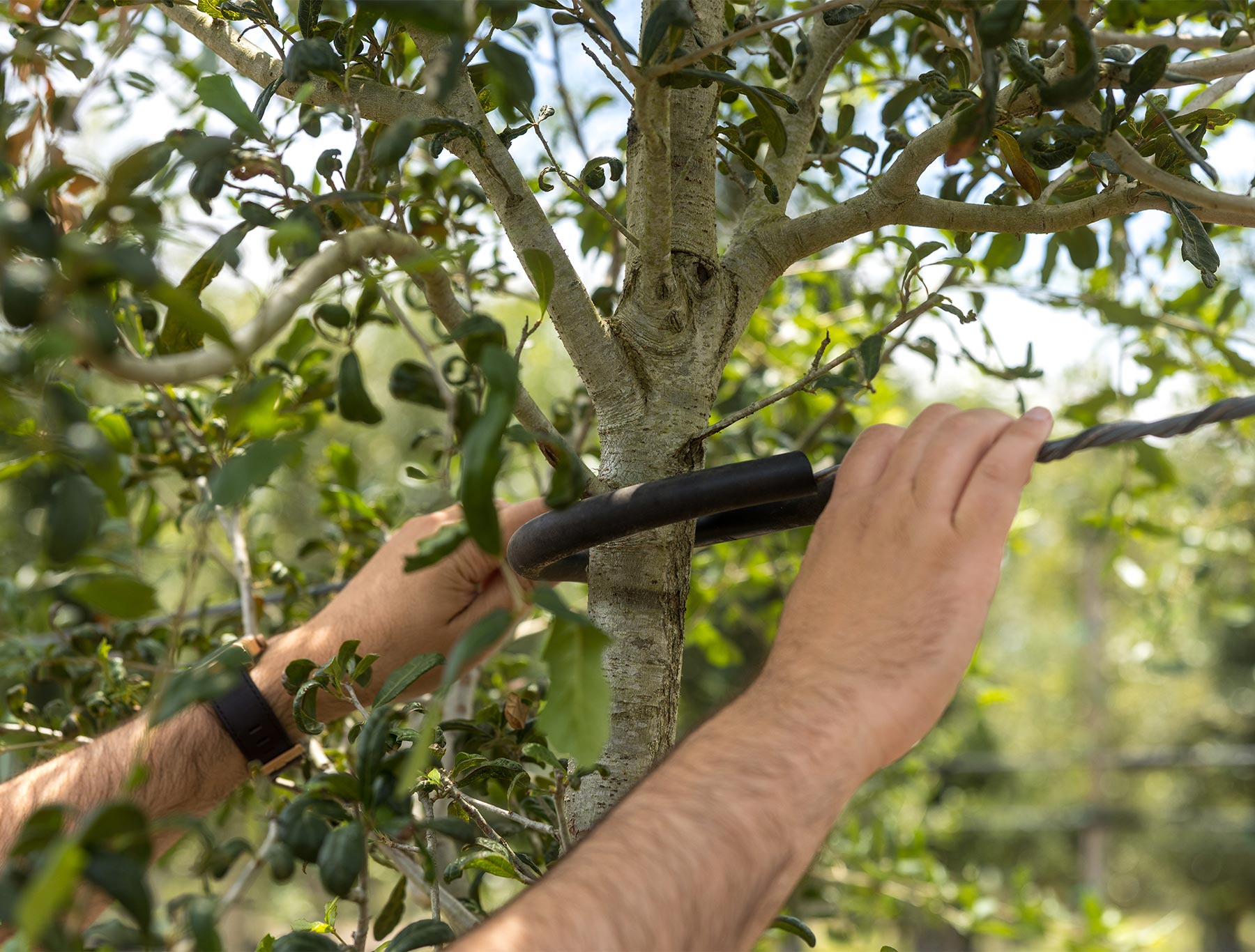
Step 3: Attach the Support System
Using a system like EZ Tree Wrap:
- Cut tubing to size and place on trellis line and helix wire
- Wrap the helix wire around the trellis line
- Secure both sides evenly
No tools required, and no tying needed.
Step 4: Check for Proper Hold
- Tree should be supported but not restricted
- Allow slight movement to encourage strength
Step 5: Adjust as the Tree Grows
- Reposition as needed
- Remove or reapply quickly when necessary
Systems that allow fast adjustment save significant labor over time.
Labor Savings: Where the Real Value Comes From
The biggest advantage of a systemized approach isn’t just better support—it’s the impact on labor across your entire operation. With traditional methods, crews spend a significant amount of time tying, adjusting, and reworking supports. These tasks may seem small individually, but across hundreds or thousands of trees, they add up quickly.
By switching to a faster, more repeatable system, you reduce:
- Time spent tying and retying each tree
- Training time required for new workers
- Variability between experienced and inexperienced crew members
- Time lost fixing improperly supported or damaged trees
The result is a smoother workflow, more predictable labor needs, and a crew that can move faster without sacrificing quality.
Common Mistakes to Avoid
Even with a solid system in place, a few common mistakes can reduce effectiveness and create extra work down the line. One of the most frequent issues is overtightening supports. Trees need some movement to develop strength, and restricting that movement can slow growth or cause damage. Inconsistency across crews is another major problem. When different workers use different methods or apply supports differently, it leads to uneven results and more adjustments later.
Other mistakes to watch for include:
- Waiting too long to adjust supports as trees grow
- Using materials that can damage or mark the trunk
- Applying supports unevenly, causing leaning or stress
Avoiding these issues comes down to using a system that’s easy to apply correctly—and training crews to follow a consistent approach.
Closing Thoughts: Build a System, Not Just a Process
At the end of the day, tree support isn’t just another task—it’s a system that affects how efficiently your entire nursery operates. When crews rely on manual tying methods, results vary from row to row and worker to worker. That inconsistency leads to more adjustments, more labor, and more time spent fixing preventable issues.
But when you implement a consistent support system, everything changes. Your crew moves faster. Your trees grow more uniformly. And your operation becomes easier to manage at scale.
Instead of constantly reacting and correcting, your team can focus on moving forward—row after row, block after block—with confidence.
The most efficient nurseries don’t depend on individual technique, they rely on repeatable systems that deliver the same result every time. That’s how you reduce bottlenecks, improve consistency, and produce a higher-quality crop without adding unnecessary complexity.
That’s exactly where systems like EZ Tree Wrap make a measurable difference.
FAQs
What is the best way to support nursery trees on a trellis?
Does EZ Tree Wrap replace traditional tree ties?
Yes. EZ Tree Wrap replaces traditional materials like clips, twine, and zip ties by providing a reusable, system-based support method that eliminates manual tying and improves efficiency.
Does it damage the tree?
No. EZ Tree Wrap is designed to cradle the trunk and allow natural movement, preventing marking, abrasion, or long-term damage commonly caused by traditional ties.
How often should tree supports be adjusted?
Tree supports should be checked regularly during active growth and adjusted as needed to prevent restriction. With systems like EZ Tree Wrap, adjustments can be made quickly, which helps crews stay efficient as trees develop.
Is it reusable?
Yes. EZ Tree Wrap components are designed for multiple seasons of use, making them a cost-effective and sustainable alternative to single-use ties.