
Beat the Freeze
For professional growers, frost can be a threat to inventory, production timelines, and profit margins. Protecting crops during frost and hard-freeze events comes down to using proven, field-tested strategies that hold up when temperatures fall.
Temperature Thresholds for Agricultural Freeze Events
- Frost: temperatures below 36°F for several hours
- Freeze: temperatures are between 28°F and 32°F for four or more hours
- Hard Freeze: temperatures below 28°F for several hours.
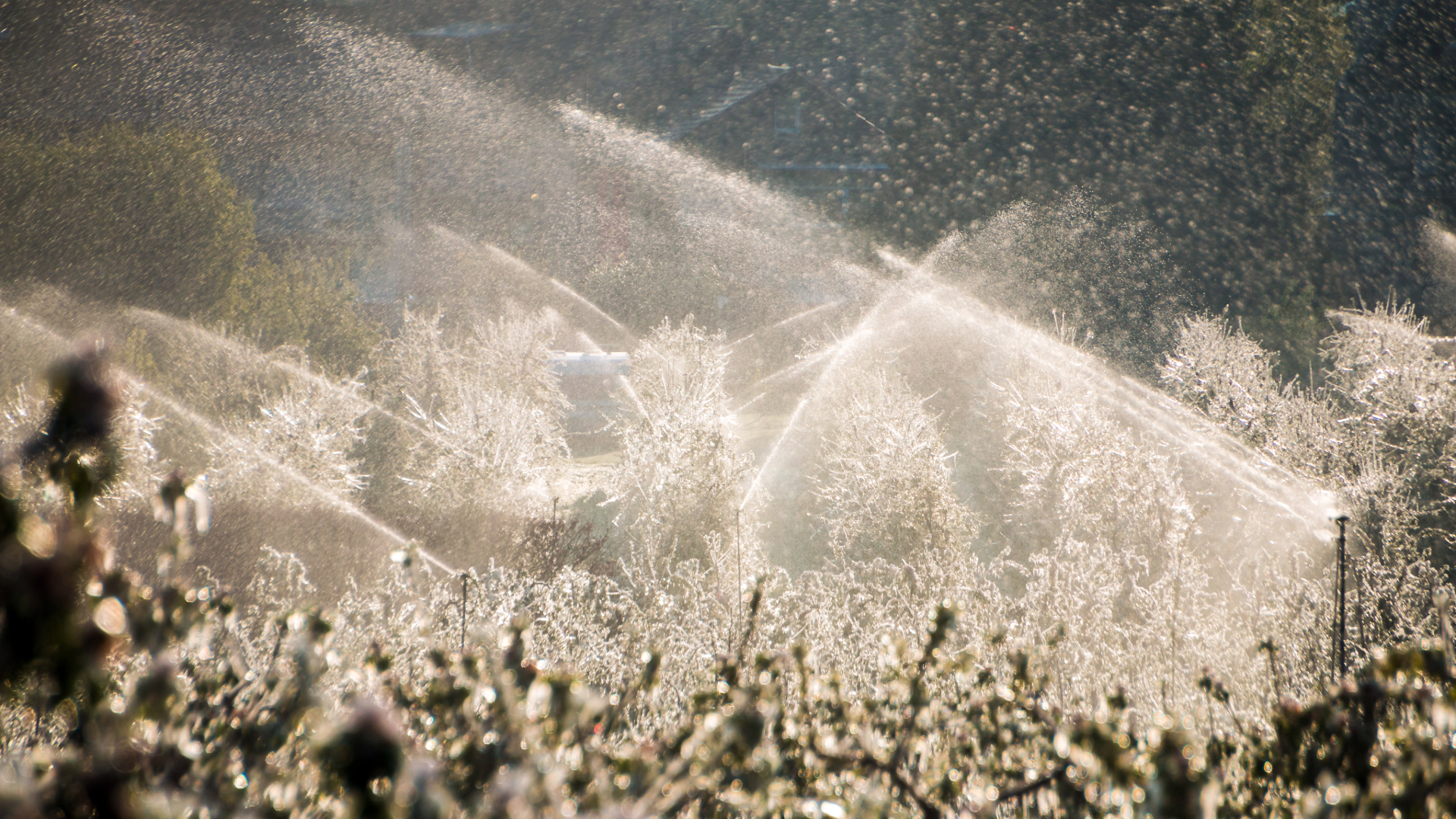
1. Overhead Irrigation for Freeze Protection
As water freezes, it releases heat in a process called heat of fusion. If you continuously apply water so it keeps freezing, the plant tissue remains right around 32°F, even when the air gets colder. That can keep buds, blossoms, and tender new growth alive during a frost.
Some Requirements/Considerations:
- Water must run continuously until temperatures rise above freezing: stopping early can cause the plant to supercool and freeze harder than if you had done nothing.
- The system must put out enough water to keep forming ice and releasing heat: low-flow sprinklers may look like they’re helping, but often aren’t delivering enough water to protect plant tissue.
- There must be no high wind: wind evaporates water faster than it freezes, which pulls heat away from plants — the opposite of what you want.
- This strategy doesn’t apply to all: not ideal for certain plants with brittle, ice-sensitive branches.
2. Frost Cloth & Row Covers
Frost cloth reduces radiant heat loss and offers a buffer against cold, desiccating winds, providing 2° – 6°F of temperature moderation depending on material weight and deployment quality. It provides a dependable and highly efficient form of protection across nurseries, especially for tender ornamentals, propagation material, and young crops that have not fully hardened off.
To function effectively, cloth must be positioned securely and sealed at its edges to maintain the microclimate it generates. Many nurseries reinforce tall or sensitive crops with hoops or support structures that prevent the fabric from resting directly on foliage.
3. Root-Zone Insulation
Root systems are typically the most cold-sensitive part of container-grown crops, with many species experiencing root injury in the 24°F to 28°F range even when the foliage would otherwise remain unharmed.
Because containers cool rapidly from all sides, root-zone insulation is essential during freeze events. Techniques such as placing pots tightly pot-to-pot, grouping containers into dense blocks, and mulching around container bases with bark or straw significantly reduce heat loss. Many growers also position larger material along the north edges of blocks to create windbreaks and microclimatic buffering.
4. Operational Readiness
The most successful freeze responses come from operations that plan in advance, rather than react at the last minute. Effective freeze preparation includes auditing irrigation systems for pressure, uniformity, and mechanical function; staging frost cloth, sandbags, stakes, and tools where crews can access them quickly; and conducting pre-season training so teams know how to deploy covers and manage irrigation under pressure. Growers also maintain organized communication plans, ensuring that overnight staff know who to call and when.
Because freeze protection is ultimately a blend of horticulture, engineering, and logistics, disciplined preparation often makes the difference between preserving inventory and sustaining significant losses.
Closing Thoughts
By combining well-executed irrigation strategies, properly deployed frost cloth, thoughtful root-zone insulation, and comprehensive planning, professional growers can meaningfully reduce the impact of freeze events on crop quality and salability. Cold protection is one of the most demanding aspects of nursery production, but with informed planning and the right tools at hand, growers can face cold-weather challenges with confidence.